On 22 May 2026, Members of the Network gathered at the Salthill Hotel in Galway for our interactive ‘Making an Impact’ Workshop. Facilitated by Dr Patricia McHugh and Emeritus Prof Christine Domegan from University of Galway, the workshop gave us the space to step back and look at how we evaluate, define, and communicate the real-world changes we create.
Both facilitators brought their deep expertise in behavioural and systems change, helping us see how tools and frameworks from the marketing world can be reframed to serve environmental advocacy and ocean literacy.
What does impact mean to us?
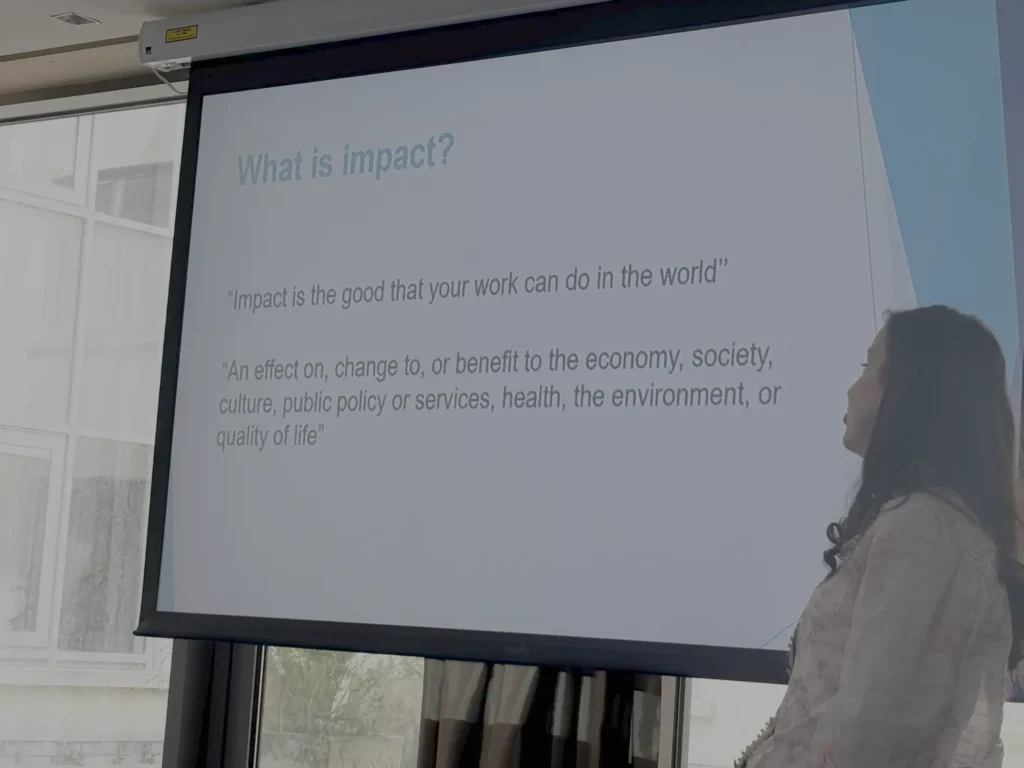
We kicked off the morning by opening up the floor to talk about what impact truly means in our daily work. For many, impact is about changing mindsets, shifting behaviours, and connecting citizen science with local communities to inspire and empower. We talked about creating those special “wow moments” that spark a lifelong connection to the sea, and using powerful storytelling to make those moments stick.
An important distinction we explored is that impact is not the same as evaluation. While evaluation helps us look at our trajectory over time, map short-term goals, and constantly monitor our current tasks, true impact is a long-term, year-on-year systemic change. One of the most resonant ideas to come out of the session was a simple question we can all bring back to our projects: What change would not have happened without our intervention, framework, or event?
Balancing data and stories
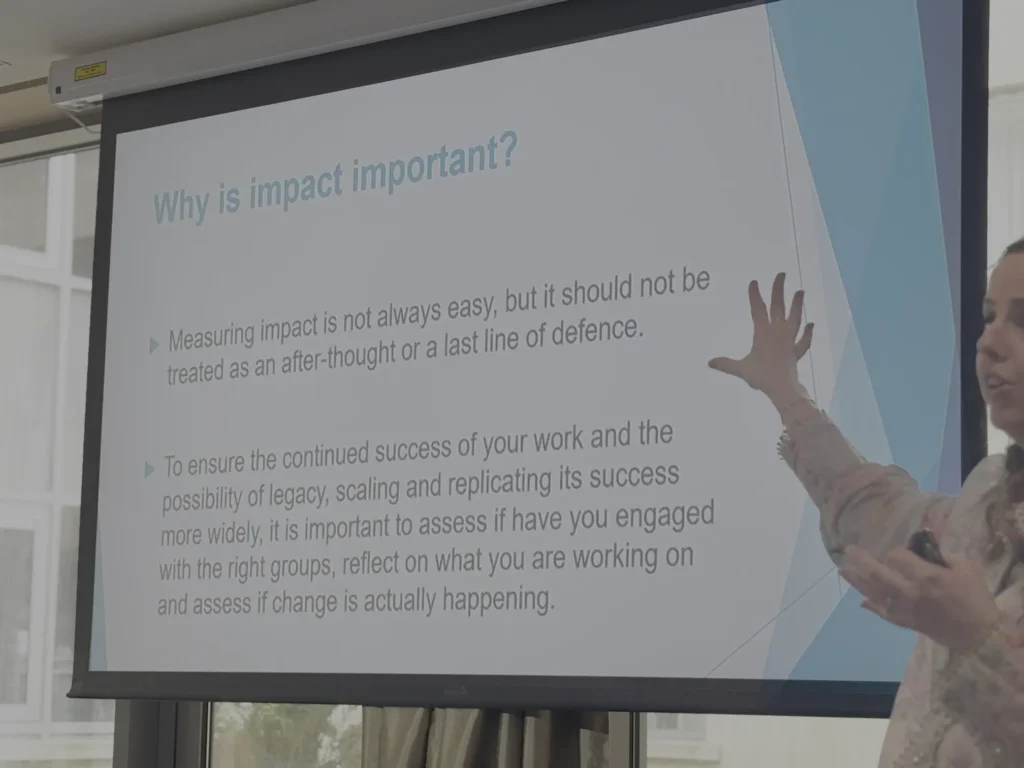
When we look at project data, it is easy to get caught up in the quantitative statistics that funders often prioritise. However, the room widely agreed that numbers alone do not tell the whole story.
To create a complete and authentic picture, we need qualitative data—the deep personal testimonials and human experiences that demonstrate real connection. We spent time exploring how weaving these two elements together makes our reporting much richer, keeping in mind the guiding quote of the day: “No stories without numbers, no numbers without stories.”
A great practical tip shared in the room was to intentionally assign a team member to gather direct participant quotes and descriptive feedback during an initiative, ensuring this qualitative insight is never lost.
Realism, expectations, and avoiding burnout
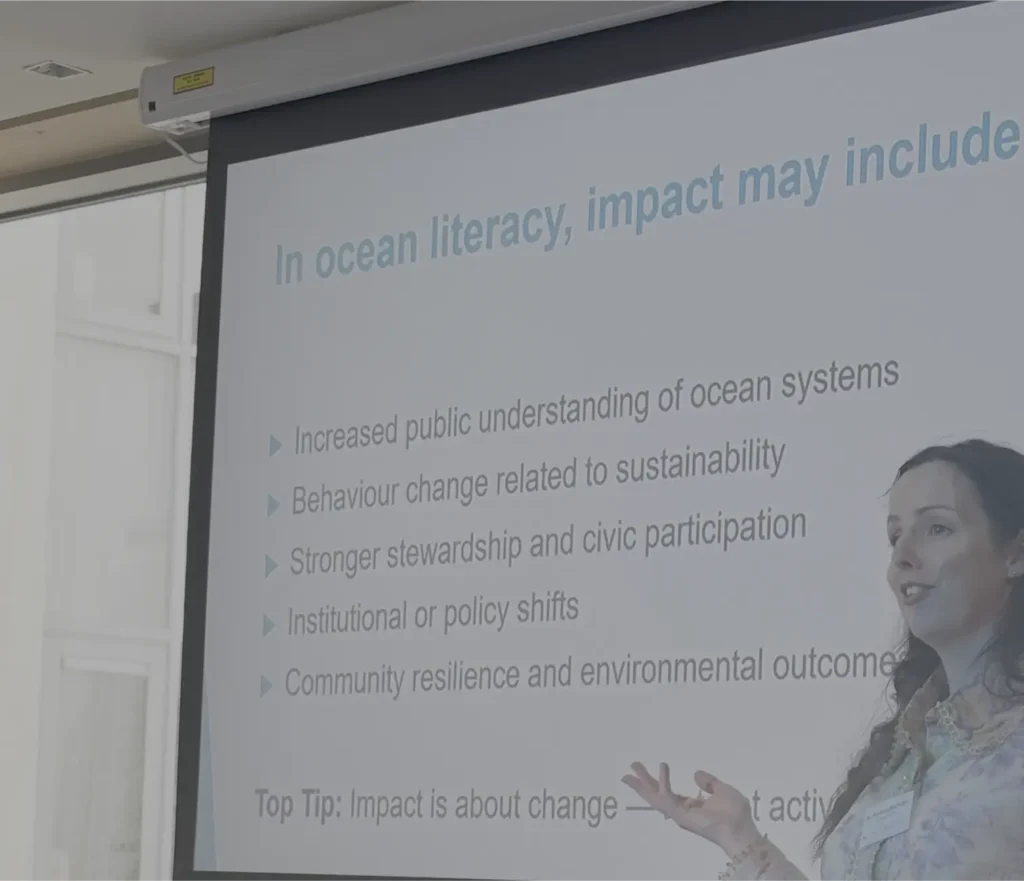
We had a very grounded, open discussion about the realities of project delivery and the vital importance of being realistic about what is and is not achievable. Being clear and honest about our boundaries up front is essential if we want to avoid organisational burnout.
This reality became particularly clear when we discussed the challenges of short-term project funding. It can be incredibly frustrating to drive community engagement and get people excited about marine conservation, only for the project to drop off when the funding ends. The collective takeaway from the room was the need for transparent, up-front communication, setting clear expectations, and intentionally embedding self-sustaining capabilities directly within the community so that positive patterns of behaviour can continue long-term.
Showing our work through the impact pathway
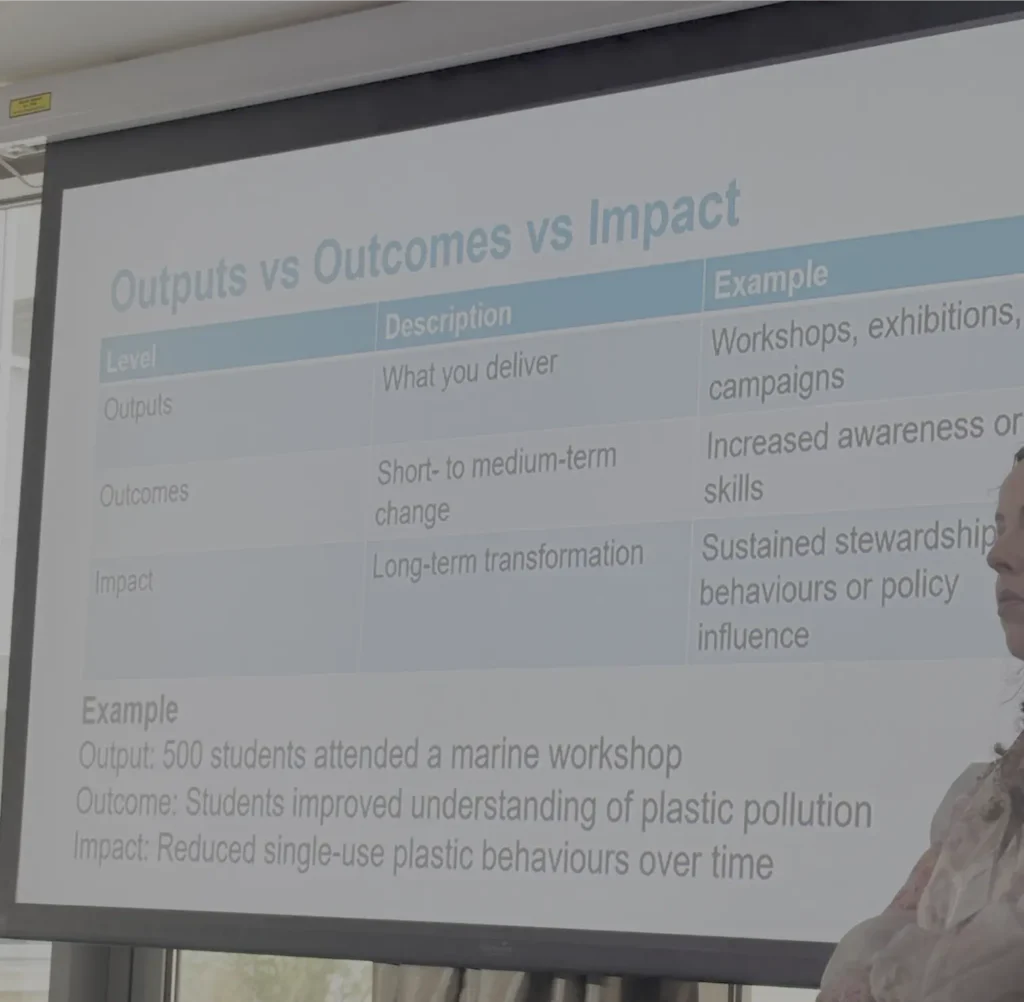
To help us visualise and structure the trajectory of our long-term goals, the facilitators walked us through a clean four-stage pathway model. This is a brilliant framework any Member can use to map out their upcoming project:
- Activities: The physical tasks we execute, such as running a citizen science beach survey.
- Outputs: Who and how many people we directly reach or count.
- Outcomes: The short-term shifts in community awareness, knowledge, and attitudes.
- Impact: The long-term, permanent cultural, environmental, or systemic transformations.
Wrapping up
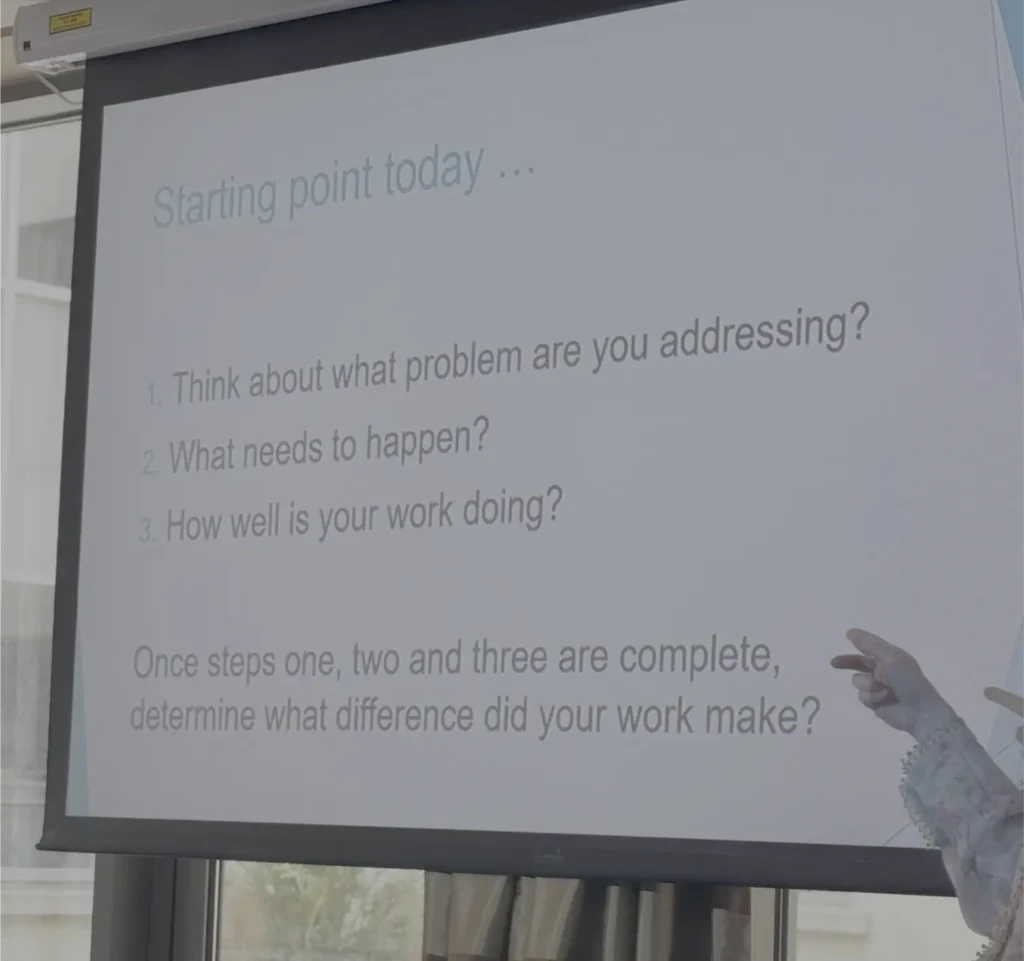
We reflected on how capturing this complete picture requires us to document everything as we go and always be prepared to “show our work.” To help guide our thinking when we are planning a new project or reflecting on an old one, the room explored six fundamental questions that serve as a practical checklist for impact:
- What would have happened if you were not there?
- What difference did you make?
- What has changed?
- Who has benefited?
- How have they benefited?
- What did they say?
Ultimately, the workshop reminded us that measuring impact is not an afterthought to be ticked off at the end of a project; it requires continuous critical thinking and must be baked into our planning from day one. It involves balancing different motivations and mapping out how we communicate with different groups.
A massive thank you to our facilitators and everyone who attended for bringing so much energy to the room!
If you want to join us for our next meeting, keep an eye on our upcoming events calendar for future network gatherings.