On 12 June 2026, the Irish Ocean Literacy Network gathered in Strandhill for a vibrant day of conversation, creativity, and connection, all centred on a shared question: how does life on the edge of the Atlantic shape our wellbeing?
Set against Strandhill’s powerful Atlantic backdrop, the day brought together researchers, community leaders, practitioners, and storytellers to explore how the ocean shapes identity, supports wellbeing, and inspires new ways of thinking about our coastal future.
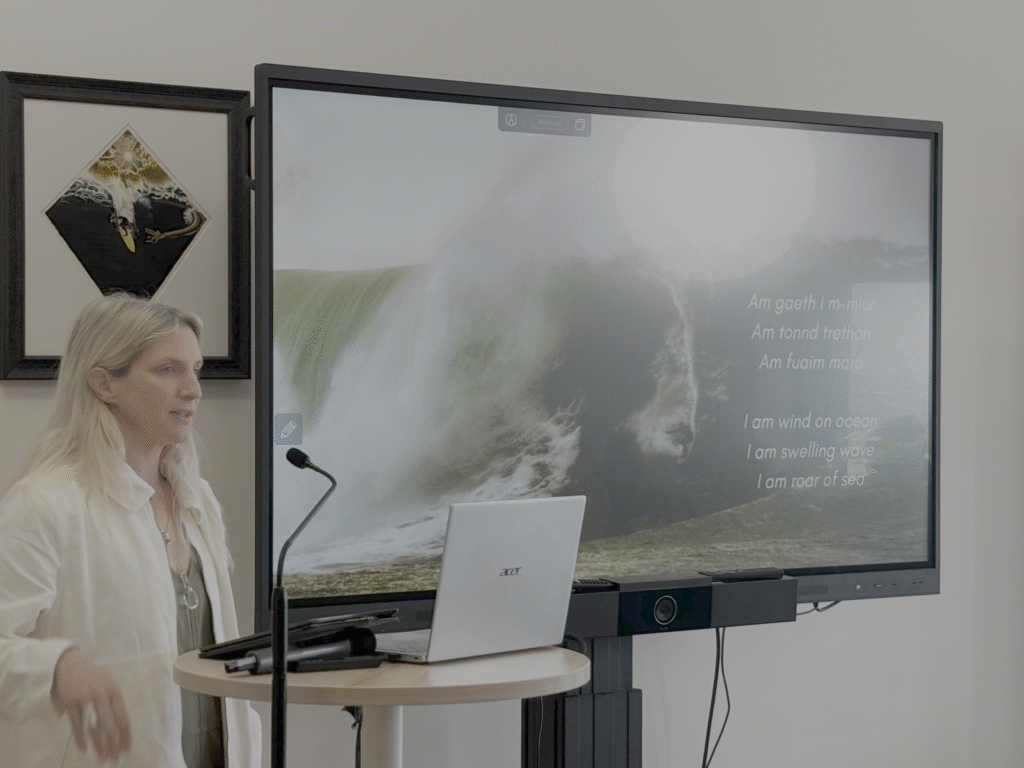
The morning opened with a keynote from Dr Easkey Britton, who beautifully framed the ocean as more than a place we visit — but a living presence that shapes who we are. Her reflections on “blue space” and human connection set the tone for a day grounded in care, relationship, and belonging.
A welcome from the Irish Ocean Literacy Network followed, highlighting the importance of collaboration across sectors and communities in building a more ocean-literate society across Ireland and beyond.
Currents of the Past, Voyages of the Future
The first panel explored Strandhill’s evolving marine identity through heritage, community experience, and the emerging blue economy. Panelists shared personal stories of growing up by the sea, rediscovering coastal connection through surfing and lived experience, and working to support more sustainable coastal development.
Across the discussion, the ocean emerged as both teacher and thread — linking past and future, shaping identity, and grounding a strong sense of place. While opportunities within the blue economy were widely recognised, panelists also spoke about the need for more responsive policy and the power of community-led action in driving meaningful change.
I Surf Atlantic: Connecting Coasts
Liquid Therapy introduced the I Surf Atlantic project, a transnational initiative connecting surf destinations across Ireland, Portugal, Spain, and France. With nine partners working together, the project aims to map and link Atlantic surf spots while making ocean access more inclusive, sustainable, and community-focused. It offered a strong example of how shared coastal experiences can build connection across borders.
Waves of Well-being
The second panel brought a more reflective focus to the day, exploring the ocean’s role in mental health, resilience, and identity. With perspectives from research, film, psychotherapy, and surf therapy, the discussion highlighted the sea as a space of healing — a place where people can reset, reconnect, and find calm within movement.
Storytelling emerged as a powerful thread throughout, helping to shift how we relate to the ocean — not as a resource, but as a relationship. The panel also reflected honestly on access and inclusion, recognising the barriers that still exist for many people in reaching and benefiting from coastal spaces.
Despite these challenges, the conversation remained optimistic, pointing to growing collaboration between health, community, and ocean sectors, and a shared commitment to widening access to blue spaces.
Across the day, one message came through clearly: the ocean is not separate from us — it is part of us. From identity and heritage to wellbeing and future opportunity, Strandhill offered a powerful reminder that coastal communities are already shaping the next chapter of ocean connection, together.
The “Shared Island & Ocean” project is a collaborative initiative by the Irish Ocean Literacy Network (IOLN) in partnership with Queen’s University Belfast (QUB) and is funded by the Shared Island Fund.