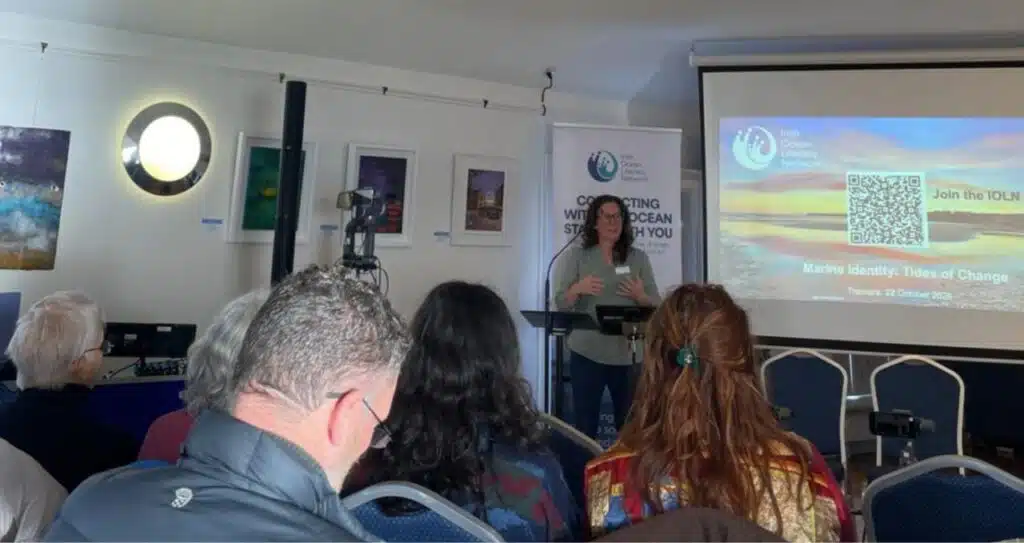
On 22 October 2026, the Irish Ocean Literacy Network (IOLN) gathered at the Coast Guard Cultural Centre in Tramore for a day of conversation, storytelling and reflection under the theme “Marine Identity: Tides of Change”. Bringing together conservationists, educators, community representatives, maritime practitioners and industry, the event explored how our relationships with the sea shape our communities, and how we can respond to the environmental, social and economic changes unfolding along our coasts.
Set against the backdrop of Waterford’s rich maritime heritage, the day explored the connections between past and present, the changing nature of coastal livelihoods, and the challenges and opportunities associated with the future of our seas. From the loss of traditional fishing practices and local ecological knowledge to the role of education, community action and offshore renewable energy, discussions considered what it means to live alongside a changing ocean — and who gets to shape its future.
Opening the event, IOLN Executive Officer Catherine McCann reflected on the importance of marine identity and the many ways the sea connects us to place, culture, history and one another. She highlighted how ocean literacy extends beyond scientific knowledge to include the emotional, cultural and lived experiences that shape our relationships with the ocean. The event invited participants to consider how these connections can help communities understand change and imagine more sustainable futures.
The Changing Tides: Nature, Heritage and Local Knowledge
The morning began with a keynote from Karin Dubsky, who explored the environmental significance of the Waterford Estuary and the challenges facing its coastal and marine ecosystems. Drawing on the area’s rich natural and cultural heritage, she reflected on the importance of protected habitats, biodiversity and the need to restore ecosystems that are already under pressure.
Her presentation considered the changes associated with climate change and the transition to renewable energy, raising important questions about how offshore wind development, supporting infrastructure and other activities can be planned in ways that protect and restore the marine environment. She emphasised the importance of considering ecological impacts alongside the wider social and economic implications of decisions affecting coastal areas.
A recurring message was that the challenge is not simply to minimise harm, but to consider how development can contribute to nature restoration and the long-term health of marine ecosystems.
The conversation then turned to Michael Connors, who shared his experiences of more than six decades as a commercial fisherman in the Waterford Estuary and surrounding waters.
Michael offered a powerful account of how dramatically coastal livelihoods and communities have changed within a single lifetime. He spoke about the closure of fisheries, the decline of traditional fishing practices and the loss of connections between fishing communities that once shared knowledge, skills and ways of life.
His reflections also highlighted the importance of intergenerational knowledge. Skills and understanding that were once passed from parents and grandparents to younger generations — from reading the tides to knowing the local waters — are increasingly at risk of disappearing as traditional livelihoods decline.
His account raised important questions about how maritime heritage can be recognised and kept alive, and how the knowledge held by people who have spent their lives on the water can inform our understanding of environmental change.
Across the morning, the importance of bringing scientific evidence together with local knowledge and lived experience emerged as a central theme. Understanding what has changed, what has been lost and what remains valuable was presented as an essential starting point for deciding what should happen next.
Environment, Energy and Education: Engaging with the Future
The afternoon panel explored engagement and the future of engagement for a sustainable ocean, bringing together perspectives from industry, community conservation and education.
Patricia Comiskey of ESB’s Tonnua project introduced the planned offshore wind development off the Waterford coast, outlining its ambitions for renewable energy generation and the potential opportunities associated with local economic development, skills, research and community benefit. She also spoke about the importance of environmental monitoring and the project’s potential to contribute to knowledge of the marine environment.
The discussion acknowledged that offshore renewable energy presents both opportunities and challenges for coastal communities. Questions were raised about environmental protection, the location and scale of development, the adequacy of consultation, and how benefits will be distributed. Participants also reflected on the importance of understanding who energy developments are intended to serve, and how local communities can have a meaningful role in shaping decisions that affect their futures.
The conversation highlighted the need for engagement to extend beyond providing information. Communities need opportunities to ask questions, share their knowledge and experiences, and understand how their perspectives can influence decision-making.
Alongside these discussions, Roisin Fitzgerald of Clean Coasts highlighted the vital role of community groups in protecting and restoring the marine environment. From beach cleans and biodiversity projects to citizen science and habitat restoration, community-led action helps people develop a closer relationship with their local environment while contributing to its care.
The panel also explored the role of education in helping people understand environmental change, think critically and shape the future of their communities.
Patrick Kerwin, a science and biology teacher at Ardscoil na Mara in Tramore and director of the Irish Schools Sustainability Network, shared his experience of developing a whole-school environmental leadership programme in which Transition Year students deliver sustainability workshops to younger pupils. Through peer-led discussions, practical activities and outdoor learning, students explore issues including biodiversity loss, climate change and the connections between environmental and wider societal challenges. Patrick emphasised that meaningful change takes time and sustained investment, and highlighted the importance of moving beyond individual actions such as recycling to help young people question information, understand complex issues and engage with decision-makers.
Richard Daly, a fifth-class teacher at Waterpark National School in Waterford City, who were awarded a Marine Institute’s Explorers Education Programme Ocean Champion Award at the event, shared how hands-on experiences help children develop a lasting connection with the ocean. Through rock-pooling, beach cleans, encounters with local marine life and collaboration with community educators, he connects classroom learning with the natural world. His work also explores the relationship between the sea, local identity and maritime heritage, including opportunities to share knowledge across generations and with schools internationally.
Together, their contributions demonstrated that education is about more than raising environmental awareness. It can foster critical thinking, preserve cultural and ecological knowledge, and give young people the confidence to question assumptions and participate in shaping their future. These skills are particularly important as communities navigate complex decisions about offshore renewable energy, biodiversity and coastal livelihoods.
Across these different perspectives, a common message emerged: meaningful engagement depends on bringing people together, recognising different forms of knowledge and creating opportunities for people to participate in shaping the future of their environment. Ocean literacy can help ensure that people are not simply informed about change, but equipped to engage meaningfully with the decisions that shape their marine environment.
Tides of Change: What Do We Want the Future to Look Like?
The closing plenary brought together the day’s discussions, exploring the connections between environmental protection, education, energy and the loss of biodiversity, livelihoods and intergenerational skills.
The metaphor of the tide offered a way to reflect on the scale of change facing coastal communities. Traditional livelihoods and long-established relationships with the sea have been transformed, sometimes gradually and sometimes through decisions whose long-term consequences were not fully understood at the time. At the same time, new developments and opportunities are emerging, bringing questions about what the future will look like and whose interests it will serve.
Participants reflected on the need to understand these changes more fully, to place greater value on maritime heritage and local knowledge, and to ensure that community perspectives are part of wider conversations about the future of the ocean.
The discussion also considered the role of industry in building relationships with communities. Meaningful engagement requires more than consultation alone: it involves listening, transparency, continued dialogue and a willingness to take local concerns seriously.
One contribution invited participants to consider the voice of the ocean itself, and how decisions might better account for the needs of marine life and the wider natural world. This served as a reminder that the future of coastal communities is inseparable from the health of the ecosystems on which they depend.
Connecting Ocean Literacy with Community Action
Throughout the day, Tramore demonstrated how ocean literacy can provide a valuable framework for exploring complex changes in coastal communities. Scientific knowledge, local experience, maritime heritage, education and community action each contribute to a fuller understanding of the relationship between people and the sea.
For IOLN, these discussions reinforce the importance of connecting the work already happening in communities — recognising the knowledge, skills and connections that communities already hold — with wider conversations about marine policy, environmental change and sustainable development.
The Shared Island & Ocean project is a collaborative initiative by the Irish Ocean Literacy Network (IOLN) in partnership with Queen’s University Belfast (QUB), funded by the Shared Island Fund.