Video transcript
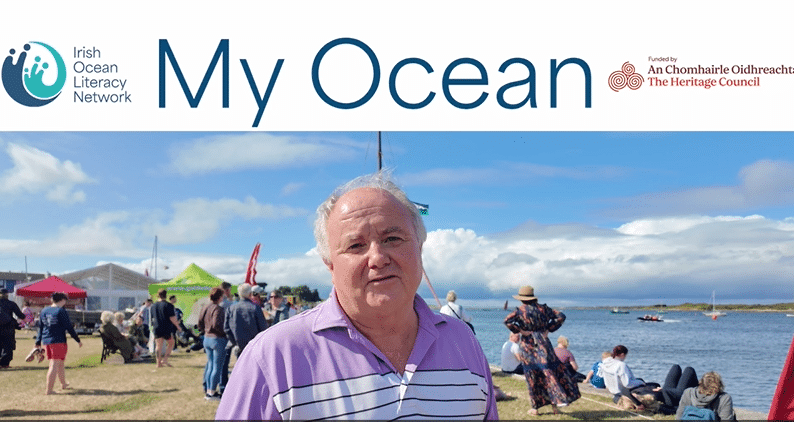
So, my name is Diarmuid Kelly. I have a couple of hats: my business side of life is Kelly Oysters, part of a family business set up by my father back in the early ’50s. My other hat is as a founding member and current CEO of Cuan Beo, an environmental organisation looking after the bay.
So, what does the ocean mean to me? It means everything to me. I’ve grown up surrounded by it, walking in it, living in it, working in it, and my whole life is the marine.
My particular interest, I suppose, comes from growing up in the family business with oysters. These flat native oysters were the only oyster in Europe up to 50 years ago. They tell a wonderful story around here, dated back 4,000 years in the shell middens, and they’ve sustained the local community all through that time.
In more recent times—the last couple of hundred years—people have been making a living from them and supporting their income. The oyster fishermen around here, well, really they’re not fishermen, they’re farmers. They become fishermen then for the month of November or December, depending on the fishing season.
Back in the mid-1900s, they had flat-bottomed boats like these that they made themselves, so it was cheap and cheerful. They’d spend the month of November repairing it, fixing the holes, and making sure it wouldn’t sink when they put it in the water. They’d go out then and use dredges to dredge the seabed to take up this wonderful oyster.
The beauty of that process back in the 1940s and 1950s was that it was very sustainable. It meant there weren’t very good catches, but there were a lot of oysters left behind. In more recent times, like the ’70s, winches came in and engines, so they became much more efficient. A lot of oysters came off the beds in those years—unfortunately, too many of them, so there wasn’t enough to keep going and keep supplying the market, and the oyster wasn’t able to recover fast enough. It takes five or six years for these native flat oysters to grow to maturity.
So the farmed Pacific oyster is the main commercial species now, and that’s where people are making a living from nowadays. They have oyster farms along the coast, ring up the hatchery, ask for a million oysters, put them out on the bed, tend them for a couple of years, and then sell them to the market.
The oyster itself is an amazing product—it’s a real ecosystem warrior. It’s able to filter up to 11 litres an hour, so it cleans the water, the ocean, and the environment around it.
Part of our work with Cuan Beo then is to educate people as to the importance of the ocean and connect people with the sea. A lot of people had a disconnect there over the years working in factories and working everywhere, so they weren’t making a living from the sea anymore and didn’t understand or appreciate the importance of it.
Part of that then was that we created an oyster reef. We put scallop shells out on the bed and captured up to 20 million young spat—young oysters. As part of an eco-credit project this year, we had two master’s students working on those reefs, and they’ve identified 230 species of seaweeds, sponges, creatures, and all sorts of biodiversity. So it’s not just about the 20 million oysters we created; it’s also the 230 species supported by that reef.
Really, it’s amazing what’s out there beyond the high-water mark. Our key is to teach people that life doesn’t end at the high-water mark; it only begins.
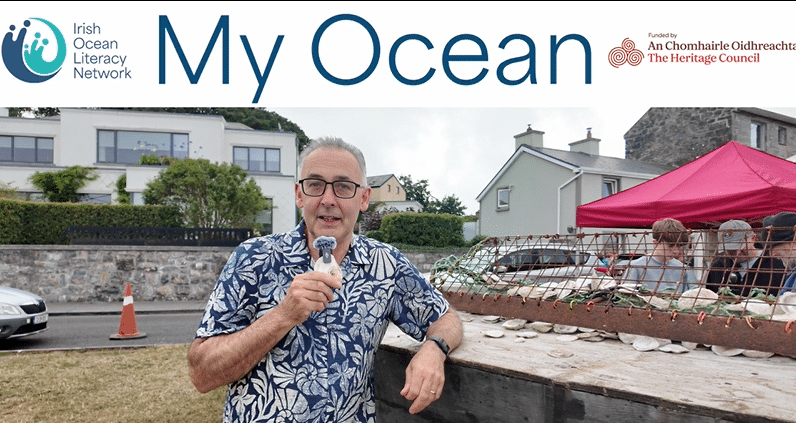
Diarmuid Kelly