Video transcript
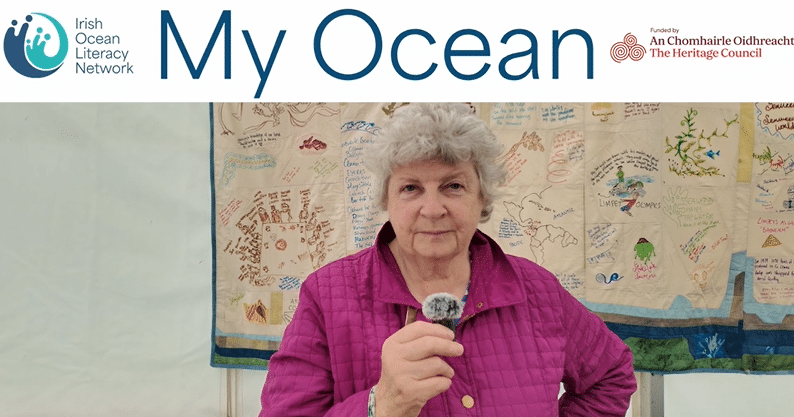
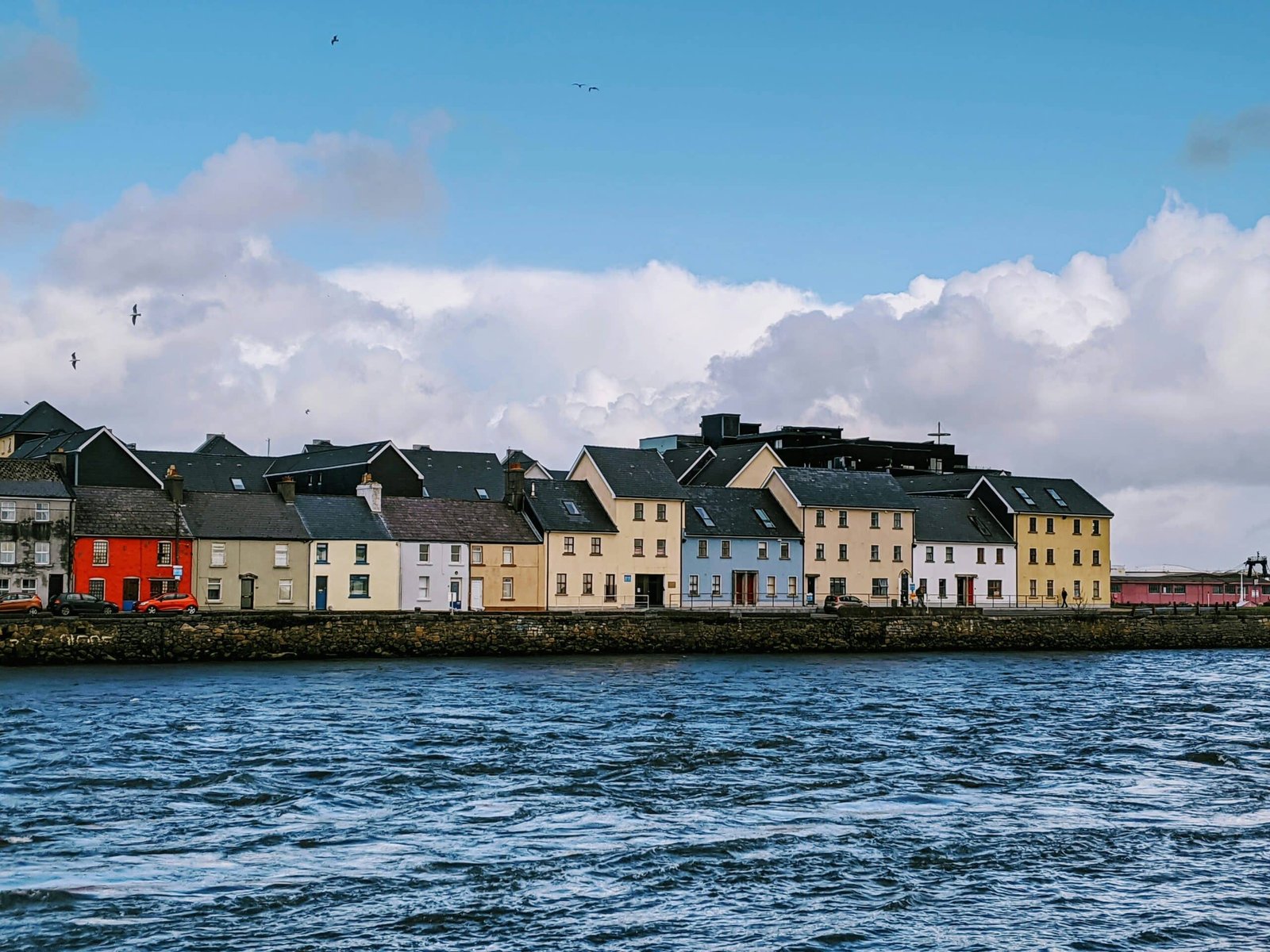
Hi, my name is Marian Connolly, and I live in Kinvarra in County Galway, gateway to the Burren, surrounded by the sea.
I grew up just down the road from here. We were farming, and the sea came in at the back of our land, so I always associated the sea as just part of growing up. My father liked to fish for salmon using drift nets once upon a time. In the winter, when I was young, you were allowed to dredge for oysters through October, November, and December.
My grandfather—my dad’s father—and my mom’s dad both had púcán. . Now, a púcán. is the smallest of what we call the Galway Hookers. Here in Kinvarra, we have a wonderful festival called Cruinniú na mBád, which means “the gathering of the boats.” You start off with your bád mór, your big boat, which everyone knows as the Galway Hooker. Then you go down a size to the leathbhád, which translates to “half-boat,” as it was half the size of the Galway Hooker. Down another size, you had the gleoiteog, which comes from the word for sweetness—these were lovely boats. You had the gleoiteog mhór and the slightly smaller gleoiteog bheag. Finally, down to the boat that every man had: the púcán. They were used for fishing, traveling in and out to the islands, and going into the local town for shopping. I saw my grandfathers fish on those boats for herring and mackerel.
We have a local island not too far from where both my grandparents lived called Island Eddy. If the islanders were in trouble, they would light some straw so the white smoke could be seen three miles away on the mainland. My neighbors and my grandfather’s neighbors would hurry to tell him there was a problem. Sometimes it was a medical emergency; other times they had run out of grocery essentials. He would sail in, find out what the problem was, and either take somebody with him or do whatever was needed.
So I’ve been around the tide, as we call it, and the ocean all my life. Here in Kinvarra, we’re surrounded by it. There are lots of boats, but there are other things, too. My family likes to swim down at Trácht Beach, and I like to go for walks along the shoreline. We’ve done many interesting walks with different people looking at the flowers, shells, and fossils. Days are just busy when you’re on the beach.
When I was younger, we also collected cockles, mussels, and lots of other shellfish to take home and eat. My grandfather used to sell bags of cockles and mussels to a man named Mr. Gibbons, who came out once a week with his lorry to collect them. My grandfather’s family was very glad to be paid for them, and the shellfish were used in restaurants in Galway.
They also used to cut seaweed. Various types grow along the seashore, so it would be cut when the tide was out and brought to one spot. Occasionally, this seaweed was made into a round “cake” surrounded by ropes to hold its shape. When the high tide came in, the cake would float up and be taken towards the quay, where it was anchored. When the lorry arrived from the factory in Kilrush, it was all in one place to load. Payment was by weight, and the families were always pleased to receive it.
During the Cruinniú na mBád festival every year in Kinvarra, we have what is called a climín. A climín is essentially a floating cake of seaweed. Teams of two—usually men, though we’ve had female teams as well—go out on the climín with 12-foot poles and push themselves from point A to point B in a race. It’s very spectacular to watch: the tide is fully in, and these round rafts of seaweed float along with two people standing on them, pushing with long poles along the shoreline to see who wins. It’s a feat of creativity, endurance, and strength, and you really have to know the layout of the bay. It’s very popular with tourists and locals alike, and the men and women on the climín love the prestige of winning.
As I said, I was born near the tide. My home place was near Clarenbridge, which is famous in Galway for its Oyster Festival. My dad used to dredge for oysters, and I even met people here in Kinvara who came across from Connemara to dredge during the winter when they weren’t out fishing. The oysters had to be measured before they would be accepted by buyers like Mr. Gibbons. They had to be at least three inches in diameter. They used a special ring on the boat to measure them—if an oyster passed through the ring, it was too small and had to be thrown back into the tide. If it was larger than three inches, it was fine to sell.
There was a gentleman named Jimmy Cummins who worked in the local pub, Paddy Burke’s, and he once found an oyster that contained seven pearls! Nothing like that had ever been heard of before. He was a champion oyster opener.
We loved getting oysters in the evening when my dad came in from dredging with my uncle Patrick (whom we called Paddy). They would always bring a few home for us. I suppose we just enjoyed the taste—I love them to this day! In fact, yesterday at Cruinniú na mBád, they did a cooking demonstration featuring oysters with a lovely seaweed sauce.
My own claim to fame is that during the Clarenbridge Oyster Festival when I was about 15, they held a poetry competition all about the oyster, and I won first prize! That was a long time ago.
So, that is my oyster story.
Marian Connolly