What does the ocean mean to the communities who live alongside it? And how can those communities have a greater say in its future?
These were some of the questions we explored when the Irish Ocean Literacy Network (IOLN) gathered in Derry/Londonderry on 20 November for the final event in our Shared Island & Ocean programme.
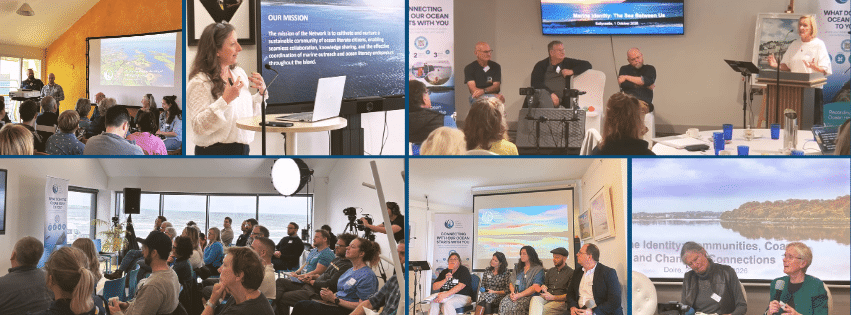
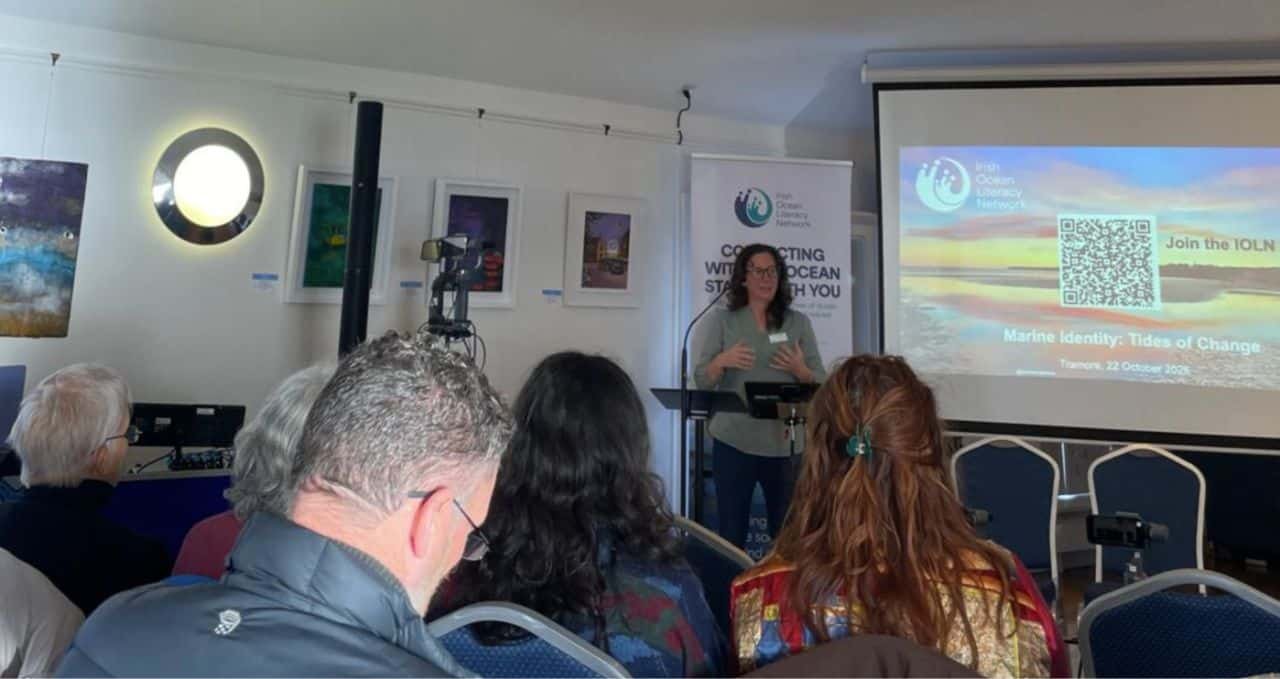
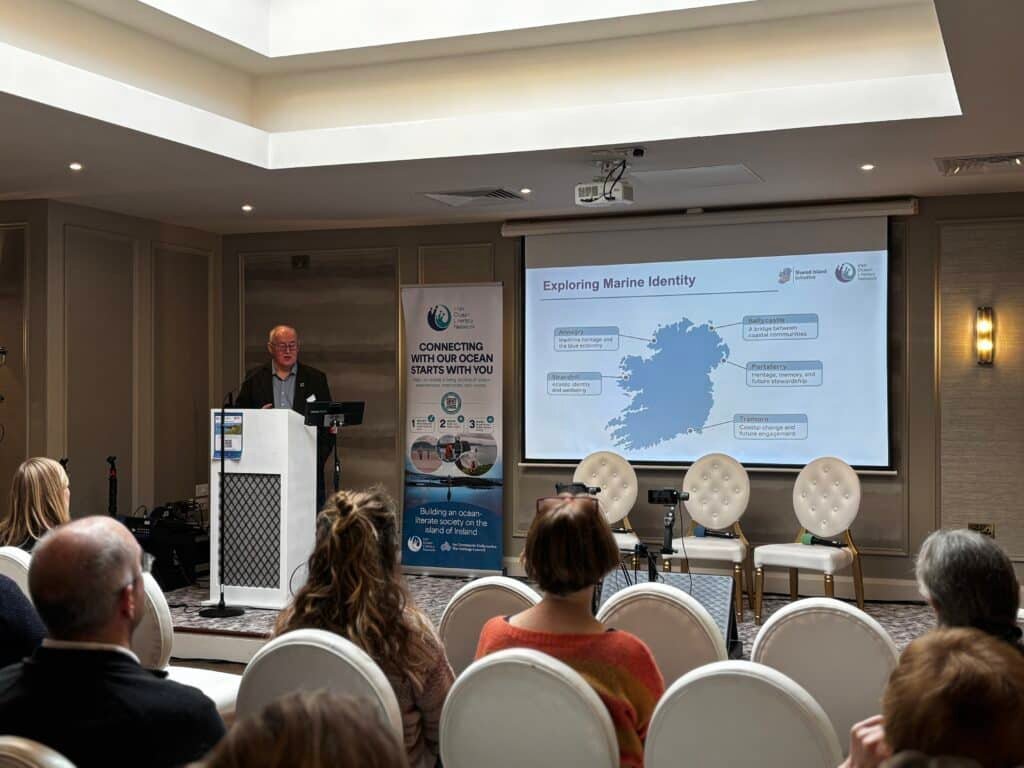
After five events in Annagry, Portaferry, Strandhill, Ballycastle, and Tramore, we came together on the banks of the Foyle to reflect on a year of conversations about marine identity, coastal heritage, environmental change, and our connections to the ocean.
The day brought together community representatives, researchers, educators, conservationists, and storytellers. There were wonderful personal stories, some challenging discussions, and plenty of questions about what comes next.
The power of communities to create change
We opened with a fascinating conversation between Dr Joan O’Doherty and journalist Lorna Siggins.
Joan shared her experiences campaigning for improved search and rescue services along Ireland’s west coast, following the tragic death of a fisherman who could not be reached in time.
Her story was a powerful example of what communities can achieve when they come together. By gathering people with the right knowledge and expertise, from fishermen to medical professionals and naval officers, the campaign helped secure major improvements to maritime rescue services.
The conversation also explored Ireland’s changing fishing industry, the loss of traditional livelihoods, and the knowledge passed down through generations of coastal families.
One question stood out: Are we finally beginning to recognise the value of local knowledge and the people who hold it?
Our changing connections to the ocean
Our morning panel, moderated by Dr Lindsey West (Queen’s University Belfast) explored the many ways the ocean shapes our identity, from language and heritage to livelihoods, tourism, and biodiversity.
Kate Burns, founder of Island Kelp on Rathlin Island, reminded us that the ocean has connected communities for thousands of years through travel, trade, and shared traditions. Those connections have not disappeared, but they are changing.
Duane Fitzsimons brought the maritime history of County Down to life, exploring how the ocean has shaped its landscape, place names, and cultural heritage.
Aodán Ó Cearbhaill shared memories of growing up in the Donegal Gaeltacht, reflecting on the rich Irish-language vocabulary associated with the ocean and the traditional fishing knowledge that risks being lost. As a primary school teacher, he also spoke about helping the next generation develop their own connections to the coast.
The audience discussion raised another important question: What does access to the ocean really mean?
We explored the impact of tourism, housing pressures, and changing coastal communities, but also the less visible barriers that can prevent people from feeling they belong in these spaces.
The Foyle through local voices
One of the most memorable moments of the day came from Dr Sara Walmsley and the Hive Choir, who performed My Connection to the Foyle, a piece created from their own stories and memories of the area.
Developed through the UKRI-funded Transformative Research Actions for Resilient Coastal Communities (TRACC) research project with Queen’s University Belfast, the performance brought together personal experiences of the Foyle through music, storytelling, and shared memories.
It was a wonderful reminder that local knowledge takes many forms, and that creative approaches can help people share experiences that might otherwise go unheard.
Caring for our coasts and communities
Our afternoon discussions, moderated by Dr Aoife Ní Lochlainn (Head of Policy & Advocacy, Irish Environment Network) brought the focus back to the health of our coastal environments and the role communities can play in protecting them.
Marine scientist Robert Wilkes shared some concerning findings from environmental monitoring, including the continued decline in the health of many of our waters.
He also questioned how effectively this information reaches the people who live alongside these environments. Scientific reports have their place, but what do they mean to someone who has watched their local coastline change over decades?
Robert highlighted the importance of citizen science, sharing examples of how community observations and seagrass monitoring can contribute valuable information to environmental assessments.
Journalist and author Kathy Donaghy brought a deeply personal perspective to the discussion. Growing up in a family of fishermen and boatbuilders on Lough Foyle, she recalled how the water provided food, livelihoods, and a strong sense of identity.
She also raised serious concerns about the environmental health of Lough Foyle, particularly the impact of aquaculture development and the challenges of ensuring local communities have a voice in decisions affecting the area.
Jade Berman of the National Trust shared examples of community-led coastal adaptation work, including the use of storytelling and creative activities to help people imagine and plan for the future.
William McElhinney of Wild Strands explored the connections between food, seaweed, outdoor education, wellbeing, and heritage. His stories of traditional harvesting practices in Inishowen showed how much knowledge is held within families and communities, and how easily it can disappear.
From conversation to action
As the afternoon continued, one theme kept returning: How do we ensure that communities are genuinely involved in decisions about their coastal environments?
The discussion was sometimes challenging, particularly when it turned to environmental pressures on Lough Foyle, questions of governance, and the feeling that decisions are often made without meaningful community involvement.
Participants questioned whether traditional public consultation processes really work. Asking people to respond to lengthy technical documents is very different from inviting them to help shape decisions.
We heard about the importance of listening, building trust, recognising local experience alongside scientific evidence, and being honest about what communities can influence.
There were also examples of what is possible, from citizen science and creative engagement to community projects that bring people together around achievable goals.
Perhaps one of the strongest messages was that meaningful change takes time. It starts with relationships, small successes, and showing people that their involvement can make a difference.
Six stops, one ocean
Closing the day, IOLN Director Heidi McIlvenny reflected on the idea that we all carry two maps of the places we know: the physical landscape and the map shaped by our memories and experiences.
But coastlines change, communities evolve, and each generation develops its own relationship with the ocean. The challenge is to keep those connections alive while making room for new stories and experiences.
Across the six events, we heard how deeply marine identity is rooted in people, place, and lived experience. We also heard a recurring concern: that communities often have a wealth of knowledge about their coastal environments, but don’t always feel that they have a meaningful voice in decisions about their future.
So perhaps the question isn’t simply how we maintain our connections with the ocean, but how we create more meaningful ways for those connections, experiences, and knowledge to inform the decisions that shape our coasts.
A huge thank you to everyone who joined us in Foyle, to our partners at Queen’s University Belfast, and to all those who have contributed to our Shared Island & Ocean journey throughout 2026.
The Shared Island & Ocean project is a collaborative initiative by the Irish Ocean Literacy Network (IOLN) in partnership with Queen’s University Belfast (QUB), funded by the Shared Island Fund.